Professional Verona Fence Repairs & Replacement
Get a code-compliant fence in Verona installed to last by licensed, insured professionals who manage permits, surveys, 811 locates, and HOA/historic reviews. You'll get proper property line setbacks, visibility clearances, and easement compliance. We set up deeper than frost line with secure footings, weather-resistant hardware, and premium materials: cedar, treated wood, vinyl, aluminum, or galvanized steel with factory coatings. Expect exact gate installations, complete inspections, and warranty documentation, plus upkeep schedules and repair guidelines. Read on for material options, pricing, installation steps, and contractor qualification.
Critical Insights
- Verify Verona zoning regulations for setbacks, heights, and sight triangles, then obtain necessary permits; schedule 811 utility identification and required inspections prior to beginning.
- Opt for long-lasting components designed for the weather in your area: vinyl, pressure-treated wood, cedar, or powder-coated metal with corrosion-resistant or galvanized hardware.
- Make certain professional installation: posts installed below frost depth with belled bases, plumb alignment, evenly spaced panels, and code-compliant gate hardware installation.
- Screen contractors by validating their state license status, insurance documentation from carriers, history of work in Verona, written project specifications, and equivalent estimates for accurate comparison.
- Provide comprehensive maintenance and repair services: reseal and protect wood, address metal deterioration, correct post positioning, preserve sight distances, and comply with pool barrier and visibility safety standards.
Understanding the Value of Professional Fence Installation in Verona
Although DIY can appear attractive, expert fence installation in Verona guarantees your fencing meets local regulations, endures environmental fluctuations, and suits diverse soil conditions. You'll obtain accurate property line confirmation, proper setback compliance, and expertly managed permits. Professionals install posts deeper than frost depth, establish effective water management, and accurately align panels to avoid frost heave. They select durable fasteners, verify underground utilities, and coordinate fence levels for visibility and protection. Installation teams also know heritage zone regulations, securing necessary approvals to maintain neighborhood character. They organize work efficiently to minimize interference, document all inspections, and provide warranty coverage matching manufacturer specifications. The end product: a reliable, regulation-compliant fence that functions in all seasons, maintains home worth, and avoids expensive fixes or code violations.
Selecting the Perfect Fence Materials for Local Climate and Style
With permits and placement finalized, the next crucial consideration is choosing materials-since Verona's freeze-thaw cycles, lake-influenced weather, and mixed soil conditions reward thoughtful choices. Emphasize resistance to deterioration, rust prevention, and stable foundation. Pressure-treated pine offers economy, but make sure to seal it and use corrosion-resistant hardware. Natural cedar resists decay and remains stable. For reduced upkeep needs, opt for composite materials with sun resistance, hidden fastening systems, and fortified guardrails.
Aluminum offers sleek lines and corrosion-resistant durability; specify powder-coated, AAMA-compliant finishes. Steel provides enhanced durability; select galvanized construction, then powder-coat for extended life. Vinyl performs effectively if you choose impact-rated profiles and UV-stabilized resin. For environmental consciousness, sustainable bamboo panels and posts reinforced with steel cores deliver the perfect blend of style and strength. Make certain to design for drainage, spiral or deep-set posts, and snow-load bracing.
Navigating Verona Permits, Codes, and Property Line Requirements
Before beginning your fence project, take time to verify your design aligns with Verona's zoning, building, and property line regulations. You'll need to check required setback distances for front, side, and rear yards, noting that corner lots typically have special visibility considerations. Make sure to check maximum height limitations, approved materials, and swimming pool enclosure standards. Should you need a variance, apply for special permission before investing in materials.
Secure the mandatory building permit and, if required, approvals from historic boards or HOA. Request a professional survey to identify property lines and map utilities and recorded easements. Keep all structures clear of easements to eliminate removal orders and easement disputes. Notify neighbors before starting work and record agreements on shared boundaries. Dial 811 to mark utilities. Keep required clearance from walkways and fire hydrants. Keep permits onsite and schedule inspections as specified.
Comprehensive Guide to Installing Your Fence
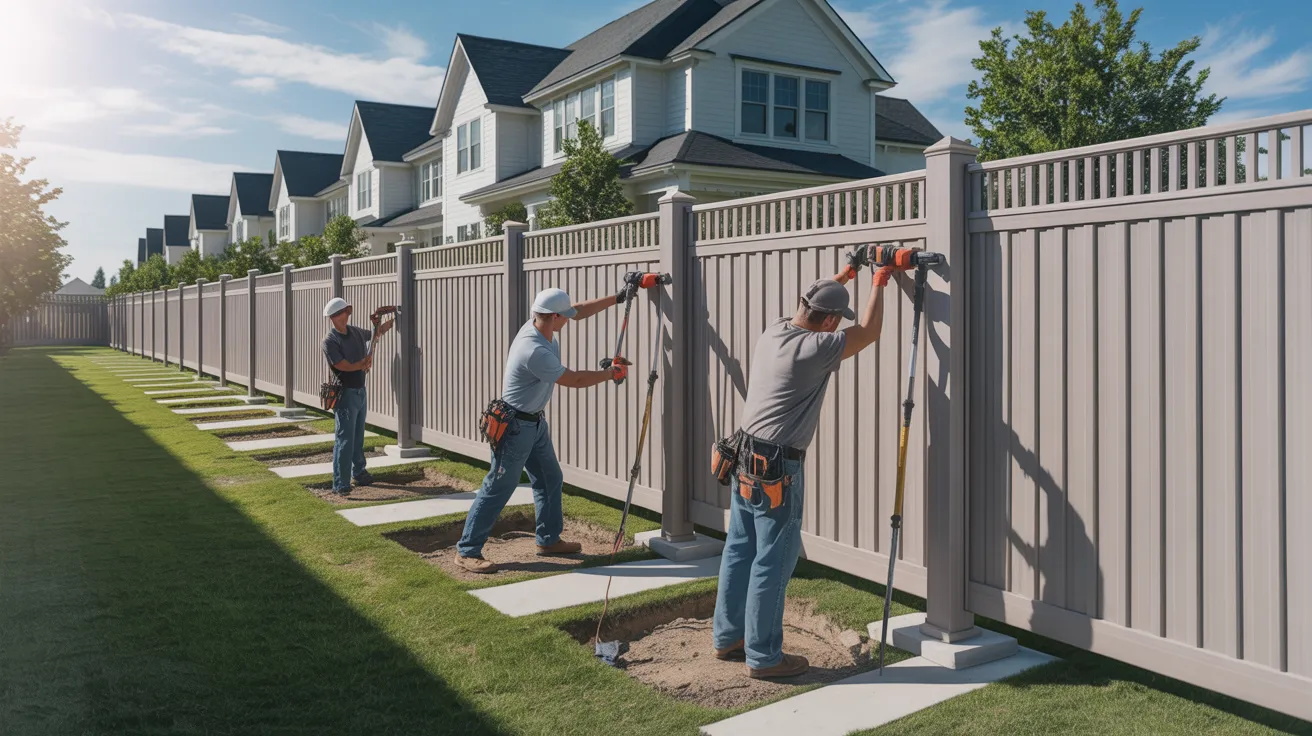
When all permits are in place and utilities are located, you'll gather supplies, confirm the layout against the survey, and snap a taut reference line along the fence run. Begin with corner installation, using laser squaring to confirm 90-degree accuracy. Calculate post positions per code and manufacturer specs. Excavate post locations to required depth below frost line, bell the base for uplift resistance, and clear loose soil. Set posts in concrete, crown the top for drainage, and align to the reference line while plumb holds. Wait for complete curing. Secure rails with corrosion-resistant fasteners, ensuring consistent reveals. Place panels or pickets with uniform gaps, following height limits and neighbor-facing rules. Install gate components with rated copyrights, install latches at compliant heights, and complete with caps and a clean site.
Common Fence Repairs That Extend Lifespan
Following a proper installation, a fence requires targeted care to remain code-compliant and strong. Begin with routine examinations: examine pickets, rails, and hardware for weakness or deterioration. Adjust hardware, swap out damaged boards, and fix post positioning to keep panels level and gates square. Resolve soil movement by resetting posts in concrete, guaranteeing correct depth and drainage. For metal parts, implement rust prevention: remove oxidation, prime bare steel, and finish with a rust-resistant coating. Oil copyrights and latches to maintain efficient, safe operation. Protect wood once a year with a high-grade preservative, and maintain vegetation cut to stop moisture accumulation. Level low points to channel runoff away from footings. Handle minor damage quickly; small, exact repairs prolong service life and maintain structural integrity.
Cost Factors: Understanding Materials, Labor, and Site Conditions
While each project is different, fence pricing in Verona is determined by three primary elements: materials, labor, and site conditions. The selection of materials establishes the baseline cost: pressure-treated wood, vinyl, aluminum, and steel each come with unique costs, durability, and code requirements. Enhancements such as steel posts, privacy panels, and eco friendly coatings improve quality but affect pricing. Labor pricing varies with crew size, expertise, and following local inspection, permitting, and utility marking protocols.
Site characteristics play a crucial role in determining costs. Obstructions, steep terrain, rocky ground, tree root systems, drainage issues, and limited access increase excavation time, concrete requirements, and equipment demands. Corner installations, gate placement, and transition points require additional fabrication work. Manage costs with detailed site plans, confirmed lot lines, and efficient permit processing. Schedule during off-peak seasons to secure better rates, stabilize costs, and guarantee timely delivery.
Expert Tips for Maintaining Your Fence Throughout the Year
Stay ahead of damage by scheduling quarterly checks and tackling small issues before they worsen. Tighten fasteners, examine post plumb, and check gate hardware placement. Inspect for deterioration, oxidation, wobbly rails, and damaged pickets. Log observations and address faults as per manufacturer specifications.
Conduct seasonal cleaning to clear away debris, salt, and pollen. For wood, wash gently, allow to dry, then apply sealant or stain as required; maintain 2-inch ground clearance to prevent wicking. For vinyl, use mild detergent; don't use abrasive pads. For metal, clean off oxidation, apply primer to bare spots, and repair with compatible coatings. Oil copyrights and latches with a weather-rated product.
Arrange yearly check-ups to verify foundation stability, proper water flow around posts, and clearance from vegetation. Keep a unobstructed fence line to minimize moisture and pest pressure.
Elevating Security and Curb Appeal Through Intelligent Planning
You can boost security and curb appeal by choosing strategic gate placement that controls access and sightlines. Coordinate materials and colors so the fence, gate, and home exterior read as a unified system. The perfect balance of form and function creates a fence that's both beautiful and dependable.
Smart Gate Location Planning
While a fence defines the perimeter, a gate directs how individuals and transportation interact with your property-so location is essential. Start with optimal placement: align the driveway gate with direct visibility to roadways, walkways, and internal traffic flow. Place it to minimize turning conflicts, and confirm setbacks, swing arcs, and clearance per Verona code. Separate pedestrian access from vehicle flow to decrease danger and enhance navigation. Locate walk gates near front entries, service paths, or mailbox routes, and confirm lighting and address visibility.
Design emergency egress routes with components allowing doors that swing outward with fast exit from inside, while preserving perimeter security. Avoid poorly lit corners and grade depressions that could lead to standing water or ice buildup. Check utility locations, water drainage, and snow removal zones prior to finalizing copyright post placement and operator placement.
Harmonizing Materials and Colors
With gate locations set for safe flow, the next consideration centers on selecting fence materials and design elements-choices that influence security, maintenance, and neighborhood fit in Verona. Select materials that satisfy structural and safety requirements, then verify height and visibility align with local regulations. For durability, evaluate aluminum or galvanized steel; for seclusion, choose cedar with sealed fasteners or composite material. Match material and finish with the house: use color shifts that progress from building to landscape, and incorporate texture matching-smooth metal with textured stone, matte composite complementing brick-to achieve cohesion. Specify anti-tampering hardware and locking latches in coordinated finishes. Prefer factory finishes for longevity, and maintain clear sightlines at corners for protected pedestrian and vehicle areas.
Finding a Qualified, Insured, and Local Fence Contractor
While design and materials are important, start by vetting credentials to protect your project and property. Confirm state licensing through Licensed verification portals and confirm the company information corresponds to the proposal. Obtain certificates of insurance for general liability and workers' compensation; ask for direct copyright verification. Verify bonding status when mandated by Verona or county code.
Prioritize local expertise. A community-based expert is familiar with Verona municipal requirements, setback rules, and utility mark-out procedures, minimizing delays. Ask for recent local testimonials and examine finished installations to assess installation accuracy, ground anchor depth, and component strength.
Make sure to get a written scope that includes: materials, post spacing, footing specifications, gate hardware, permit handling, utility locates, timeline, and warranty details. Evaluate all proposals systematically to ensure apples-to-apples comparison and make sure to get formal change requests before proceeding with work.
Common Questions and Answers
How Much Time Will Fence Construction Affect My Yard Access and Pet Schedule?
Plan for disturbance lasting 2-5 days, depending on terrain, material, and length. You won't have full yard access during post installation and panel setup, and will get back limited access using temporary walkways. Make arrangements for pet walks and bathroom breaks, and employ pet kennels or indoor containment when gates are off or concrete cures. Make sure to mark utilities, lock gates each night, and arrange crew arrival windows. You can decrease downtime by staging materials, clearing obstacles, and verifying weather-dependent cure times.
Can You Install Quality Fencing During Winter Months in Verona?
Indeed, you can install fences in Verona's winter without compromising on quality. Similar to Nordic construction practices, you modify your approach: evaluate ground frost depth, employ helical or driven posts where digging fails, and schedule pours during temperature-appropriate times. Choose cold curing concrete or additives, keep correct slump, and safeguard footings with insulated blankets. You'll check post plumbness as materials contract, pre-drill brittle lumber, and comply High Point Fencing LLC with manufacturer temperature requirements to keep warranties and performance intact.
What's the Difference Between Warranties for Storm and Snow Damage Versus Workmanship Defects?
Weather-related damage is normally protected by a manufacturer's warranty coverage or homeowner's insurance, while construction flaws are protected by contractor workmanship coverage. You can expect material warranties that don't cover misuse, ground movement, or poor maintenance. Contractor warranties typically protect against post installation, alignment, and securing issues for a set timeframe, not including storm damage. Make certain to check claim procedures, damage evidence requirements, and transfer conditions. Check limitations for wind velocity thresholds, ground frost, and acts of nature prior to signing.
Should Neighbors Be Informed or Give Permission Prior to Installation?
Typically, neighbor approval isn't required, but you need to adhere to property lines and local permit requirements. Think of it like debugging shared code: a single mistake impacts all parties. Confirm your property lines, indicate boundary distances, and obtain necessary permits. Give neighbors a courtesy heads-up, particularly when requiring access to their property. Document everything with pictures, and display permits onsite to stay within regulations.
Do You Offer Financing Plans or Payment Options for Large Fence Projects?
Indeed - many larger fence projects feature phased payment structures to distribute expenses. You'll typically pay a modest upfront payment, a progress payment at material procurement, and final payment upon substantial completion after inspection. Document payment terms and schedule in writing. Check for payment processing fees, ACH discounts, and installment arrangements with APR and term disclosures. Ensure progress payments align with finished portions and retainage covers completion details before project closeout.
Summary
In Verona, when it comes to fencing, you want a fencing solution offering beauty as well as durability. You must carefully consider municipal regulations with accurate boundary measurements, quick setup with quality materials, and initial investment against enduring worth. Prevent mistakes by following established standards: proper foundation work, corrosion-proof components, and accurate lot line determination. Select intelligent design features for protection and seclusion; implement routine care for optimal performance. Most importantly, partner with a licensed and insured local contractor - because perfect outcomes stem from proper execution.